











DATA MARKETPLACE

Start With the Right Data 
Capture Strategy

Getting The Right Field Data is Complex and Critical

We are your field intelligence consultant, helping you define what you need, how to capture it, or where to get it. Whether using your existing assets or tapping into next-gen data capture methods through our trusted partner network, we make it simple to move forward faster without wasted time or resources.

Identify the best-fit field data collection method for your project
Avoid overspending on unnecessary imagery precision
Source the most recent data for absolute accuracy

Expert Support for Field Data Collection and Integration

Whether you are planning a fiber build, assessing damage, or mapping utility infrastructure, we help you identify the best imagery and collection method based on your goals, budget, and timeline. Once your data is captured, our AI-enabled feature extraction process can begin to build the map, digital twin, and analytics you need to move forward.

Already Have Data?
We will review it for compatibility and integrate what works.
Need New Data?
We will help define your capture needs and coordinate sourcing through our partner network.
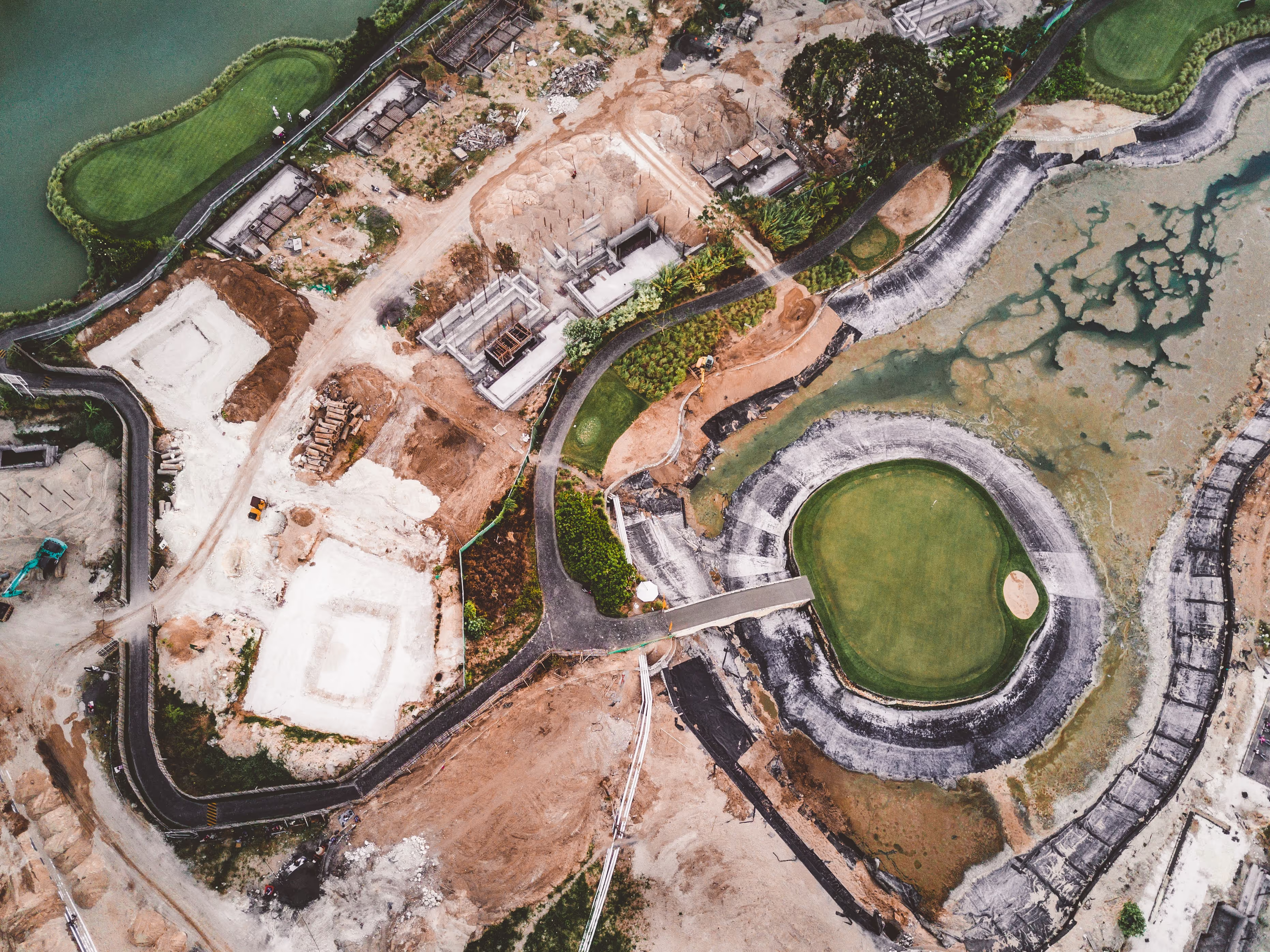

We Support All Field Imagery and 
Point Cloud Formats

From aerial imagery to 3D point clouds, we handle it all and deliver accurate, up-to-date basemaps that reduce fieldwork and accelerate your project timelines.

Satellite Imagery

One of the most affordable and accessible options for remote field data. While typically lower in resolution (30 cm or more), it is well-suited for early-stage planning, large-area analysis, and broad contextual reference.

Aerial Imagery (Aircraft)

A cost-effective option for covering large areas quickly, especially when using providers like Nearmap. While less precise than drone data (around 5–15 cm resolution), it’s excellent for permitting and high-level design.

Drones

Drones capture high-resolution imagery and nearly all common layers with accuracy comparable to field crews. Ideal for audits, make ready work, and low-level design. Access, flight logistics, and cost may vary based on project scope and location.

Mobile Terrestrial LiDAR

LiDAR captures dense, highly accurate 3D point clouds ideal for aerial utility work and complex environments. It offers unmatched detail and versatility, though it requires specialized equipment and coordination.

Backpack or Handheld LiDAR

Backpack and handheld LiDAR provide high-density scans for small areas or hard-to-reach environments, with accuracy similar to mobile and aerial LiDAR. It’s best for site-specific feature extraction, but requires trained operators and is labor-intensive.

Field Surveys (RTK/GPS)

Highly accurate, ground-based data collection used to validate or supplement other sources. Best for targeted QC or when ultra-precise measurements are needed, though it’s time-consuming and costly at scale.

Public/Open-Source Datasets

Freely available (e.g., USGS LiDAR or satellite). While often outdated or lower in resolution, they are cheap and readily accessible. Best used for High Level Design (HLD) or to augment other sources.

House Data

Detailed property-level data to support site assessments, asset management, and planning. Integrates with other field sources to give a comprehensive view of the project environment. Ideal for projects requiring property boundaries, building footprints, and related infrastructure details.

Network of Proven Data Partners

We’ve built strong relationships with some of the top data providers in the industry. While we don’t collect imagery ourselves, we’ll connect you with the right team when needed so you get what you need without slowing down.

Connect With Our Team to Discuss Your Project’s Data Strategy